Story · 27 August 2026 · 5 min read
Winter styling: a layering guide that starts at the skin
Organic cotton socks, a cotton base, and room to breathe. How to layer naturally dyed essentials for cold European winters without overheating indoors.
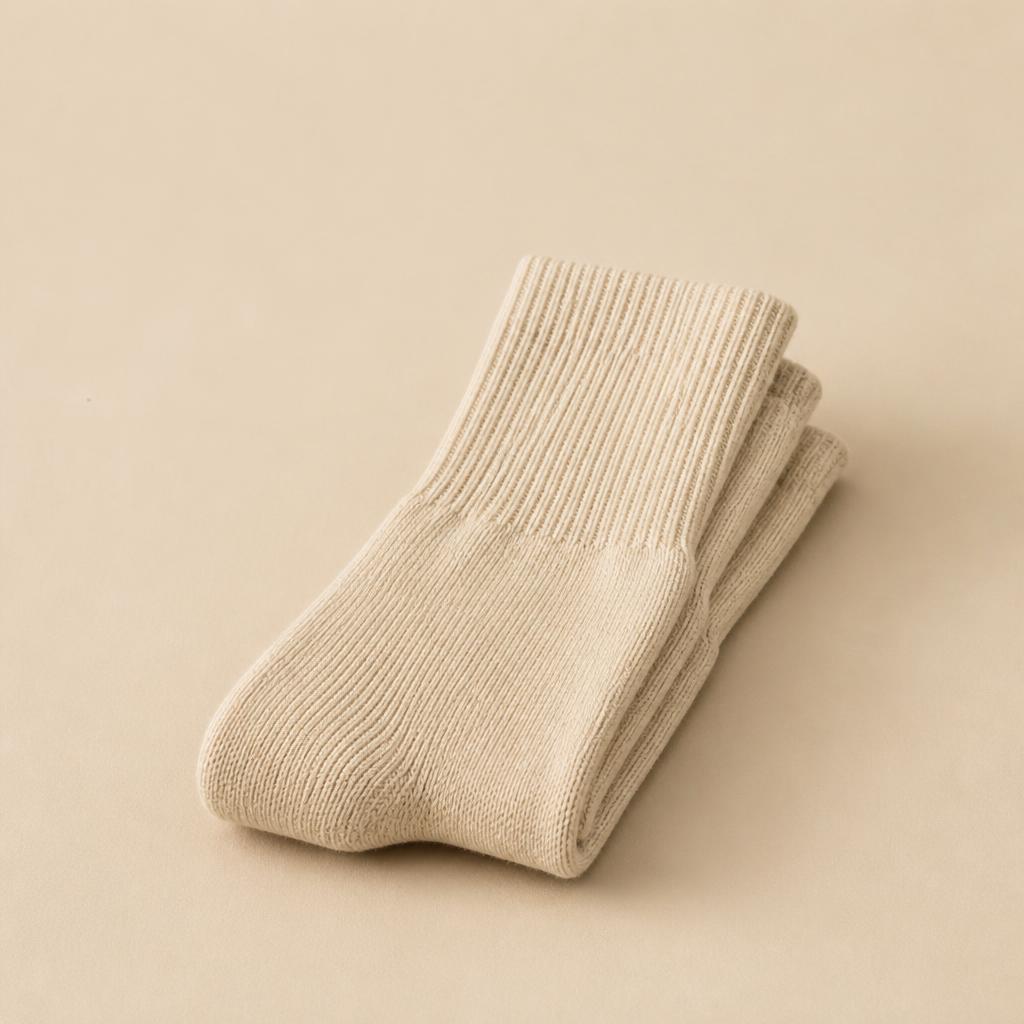
Winter dressing goes wrong in the same way every year: too much insulation, not enough moisture management. You leave the house cold, arrive somewhere warm, and spend the rest of the day damp. Good layering solves the second problem first.
Layer one: what touches the skin
The base layer is not there to keep you warm — it is there to move sweat away so the warm layers can do their job. Organic cotton does this without the plastic smell that synthetic base layers develop by February.
Start with organic cotton socks and a brief that sits flat, then the everyday tee. Nothing tight; compressed fabric cannot move air or moisture.
Layer two: the one you take off
A knit or overshirt over the tee is the layer that comes off the moment you step inside. Choose it for how easily it packs, not how warm it looks — it spends half the day in a bag.
Layer three: wind and rain
In a European winter, wind steals more heat than cold air does. A shell that blocks it beats an extra jumper almost every time, and it keeps the naturally dyed layers underneath dry.
Feet, first and last
Cold feet make the whole system feel like it failed. Give socks room — a thick sock crammed into a tight shoe cuts circulation and gets colder, not warmer. Size up the boot before you size up the sock.
Keep a dry spare pair in your bag from November onwards. It is the smallest change with the biggest return on a winter commute.